
Airborne forces landed inland. French civilians and resistance networks were part of the same landscape.
BACKGROUND
D-Day was the beginning of a sustained Allied campaign in German-occupied France. The landings depended on years of planning, coalition decisions, weather, deception, and the ability to move supplies after the first troops reached shore.
By 1944, Allied leaders had been planning a major cross-Channel invasion for years. The Soviet Union had long pressed Britain and the United States to open a major front in western Europe. Operation Overlord aimed to establish a secure foothold in German-occupied France. The Allies chose Normandy and prepared ships, landing craft, aircraft, supplies, rehearsals, and a deception campaign that encouraged Germany to expect an attack near Pas-de-Calais.
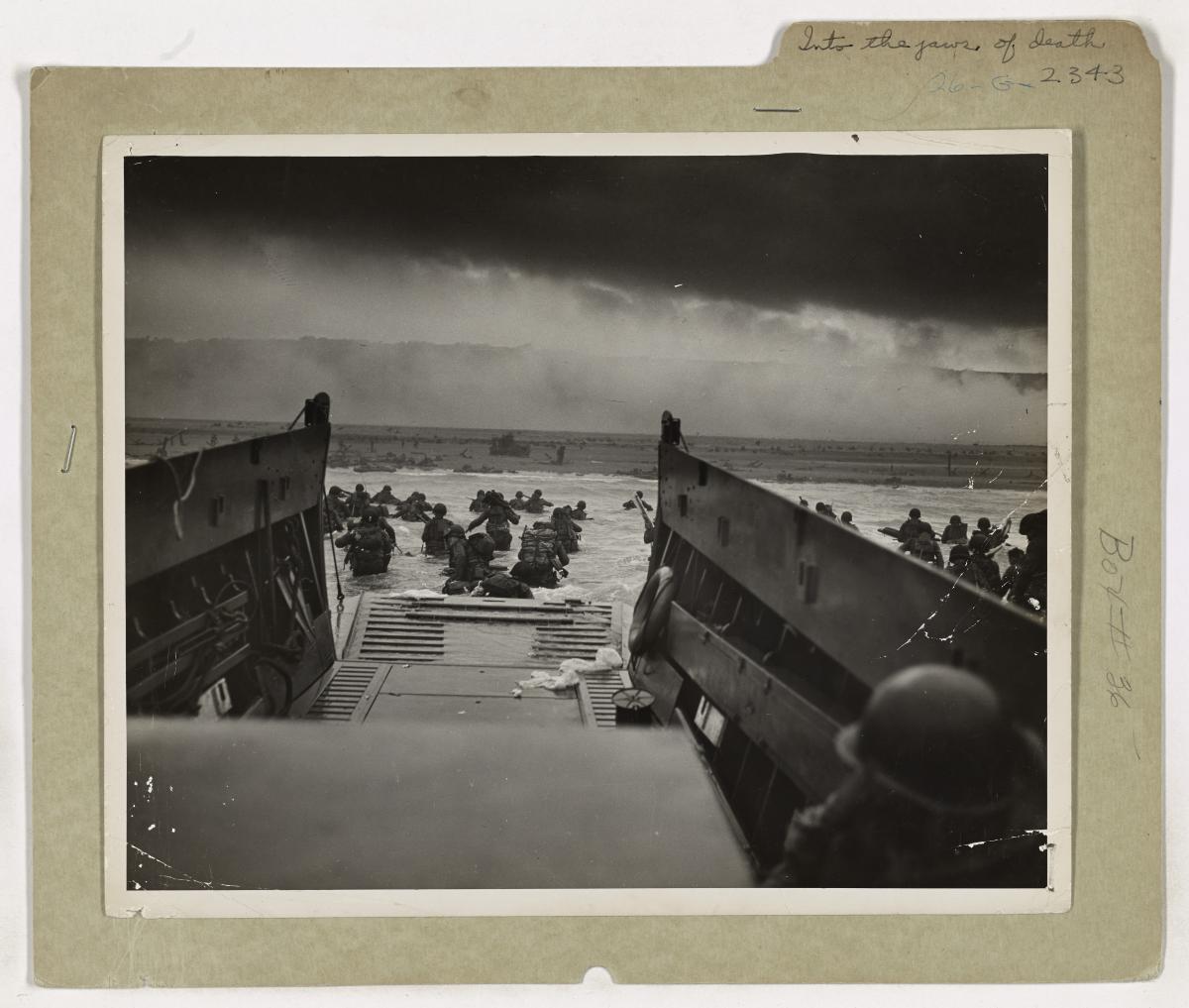
On June 6, 1944, airborne troops landed behind German defenses while forces crossed the English Channel to five beaches: Utah and Omaha for U.S. troops, Gold and Sword for British troops, and Juno for Canadian troops. Men from many other Allied nations served at sea, in the air, and on land. Weather, tides, obstacles, and enemy fire disrupted plans; conditions differed sharply from beach to beach. At Omaha, U.S. forces encountered especially severe resistance. A map with five colored arrows can show landing sites, but it cannot by itself show fear, casualties, or decisions made under fire.
The landings held, but the battle for Normandy lasted through the summer. Allied forces needed ports, fuel, roads, replacements, and a way through the hedgerow country. French resistance members supplied intelligence and disrupted German movement. French civilians also suffered from German occupation, Allied bombing, and ground combat. The success of a military operation must be weighed alongside those experiences.
Normandy did not win the war alone. The Red Army launched Operation Bagration later in June, and the Italian and Pacific campaigns continued. D-Day helped create a sustained western front that forced Germany to fight major Allied armies from both east and west. Follow the route from beachhead to breakout to liberation, and ask which decisions made each next step possible.
Explore the story in depth
Coalition planning before June 6
The Soviet Union had long asked Britain and the United States for a major western front against Germany. Allied leaders debated when and where a cross-Channel invasion could succeed while they fought in North Africa and Italy. Normandy offered beaches and access to a possible port, but it also required the Allies to move a large force across rough water under enemy observation. Operation Fortitude, part of the deception effort, helped suggest that the main attack would come near Pas-de-Calais. Planners gathered landing craft, trained units, studied tides, and arranged air and naval support. General Dwight Eisenhower made the final decision to proceed in a narrow weather window.
Airborne forces landed inland to protect approaches and disrupt German movement. On the coast, U.S., British, and Canadian assault forces faced different obstacles at the five beaches. African American units, including the 320th Barrage Balloon Battalion, also took part, though segregated military policy limited their recognition. The first day cannot be represented by one photograph from one beach.
The real test was staying and moving inland
A landing force needed a beachhead large enough to receive people, vehicles, food, fuel, and ammunition. Engineers cleared obstacles, and ships unloaded even without an immediately usable deep-water port. The Allies used an artificial harbor and worked to take and repair Cherbourg. Storms, German defenses, and damaged roads repeatedly disrupted supply. In the hedgerow countryside, earthen banks and vegetation made movement and visibility difficult, so the advance was far slower than a simple arrow on a map suggests.
French resistance members gathered intelligence and disrupted German transport, while French civilians suffered under occupation and from bombing and ground combat during liberation. The breakout from Normandy came weeks after June 6; Paris was liberated in August. At the same time, Soviet forces attacked in the east and Allied armies fought in Italy and the Pacific. D-Day mattered enormously because it established a lasting western front, not because it ended the war that day.
A coalition landing becomes a campaign
The landing beaches were assigned to different forces, but none could succeed in isolation. Airborne units landed inland; naval gunfire and aircraft supported the assault; engineers faced mines and obstacles; crews had to bring more troops and material across the Channel afterward. Weather forced a choice about timing. Deception encouraged German commanders to expect a main landing elsewhere. A plan shows intended sequence, but a report from one beach shows only what happened there. Comparing Utah with Omaha, for example, means looking at different defenses, geography, and outcomes rather than treating all five beaches as one experience.
Once a foothold held, the hedgerows slowed movement and Cherbourg's port required repair before it could supply the advance. French civilians endured occupation, bombing, and fighting even as resistance networks aided the Allies. A June 6 headline did not mean France was already free. Students can trace how a decision at sea depended on a road inland, a port, and the people living between them.
Investigate the source: National WWII Museum: D-Day and Normandy campaign ↗
Words in context
- beachhead
- a secured foothold on a shore from which troops and supplies can move inland
- deception
- a plan to mislead an opponent about an attack's location or timing
- hedgerow
- a dense bank of vegetation and earth that could block sight and slow movement in Normandy
- Operation Fortitude
- the Allied deception effort that encouraged Germany to expect the main invasion near Pas-de-Calais