
Voting, access and suffrage
Background
The right to vote and the ability to use it can raise different questions. An amendment may prohibit a particular kind of exclusion, while deadlines, polling locations, and ballot access influence whether eligible people can participate in practice. A historical argument about expanded suffrage is stronger when it identifies the specific barrier and the change that addressed it.
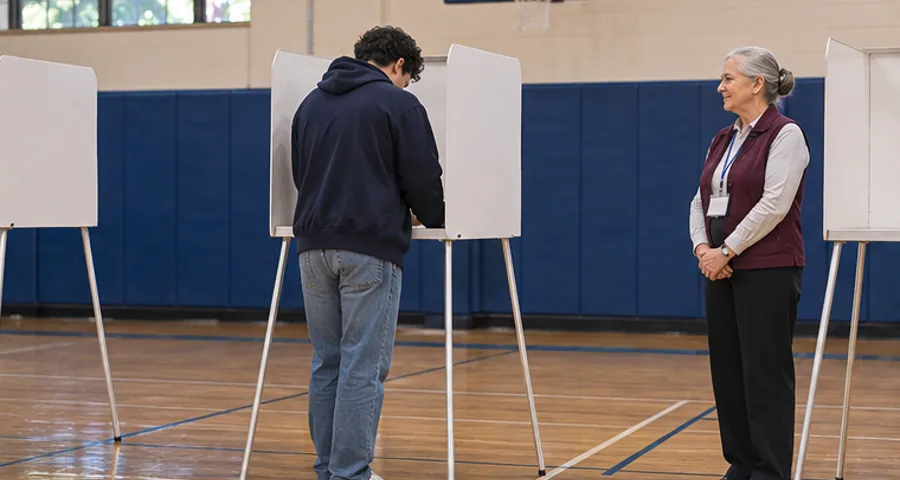
Suffrage means the right to vote. The electorate is the group of people eligible to vote in a particular election. Many elections require voter registration, the process of adding eligible voters to official lists. A precinct is a local election area, a polling place is a location where people vote, and a ballot presents the choices.
An absentee ballot allows a voter to vote without visiting their regular polling place on Election Day. A provisional ballot lets a person record a vote while officials check whether it can be counted. A secret ballot protects the privacy of each person’s choices. Voter turnout measures participation. When you compare turnout percentages, check whether the denominator is registered voters, eligible voters, or another group.
Voting protections expanded over time. The Fifteenth Amendment bars voting denial based on race, color, or previous condition of servitude. The Nineteenth bars denial based on sex. The Twenty-Fourth prohibits poll taxes in federal elections. The Twenty-Sixth protects citizens eighteen and older against age-based denial. These amendments targeted particular barriers. Check election procedures with official state or local election offices.
- ProcedureCheck an official source for the location and deadline.
- EligibilityIdentify who may vote under applicable rules.
- ProtectionIdentify the amendment tied to the stated barrier.
A voter who needs to confirm a polling location needs current, official election information. A state rule excluding otherwise eligible citizens from voting because they are 18 would raise a Twenty-Sixth Amendment question. Read the scenario for the specific obstacle before deciding whether it concerns routine election administration, eligibility, or a constitutional protection.
Explore the official source: Ohio Secretary of State: voting in Ohio
Try it
An otherwise eligible eighteen-year-old is turned away solely because of age. Which amendment directly addresses that barrier?
Show sample response
The Twenty-Sixth Amendment prohibits denying or abridging the right to vote of citizens eighteen or older on account of age.
From nomination to taking office
Background
News reports can focus on who leads, while election officials follow rules for counting, checking, and certifying results. In a race with several candidates, the leader can have fewer than half the votes. Whether that ends the contest depends on the rules, which might require only a plurality or provide a runoff when no one reaches a required threshold.
A nomination selects a party’s candidate, called its nominee. In a primary election, voters can help choose candidates for the general election. Some parties also use a caucus, a party meeting, or a convention, where delegates can select or formally nominate candidates. Rules differ by state, office, and party.
The general election chooses who wins the office under the applicable rules. The incumbent already holds the office, while a challenger runs against the officeholder. In a nonpartisan election, the ballot typically does not identify candidates by party. After the election, officials count and certify the result. Formal installation or an oath can occur later when the term begins.
A majority is more than half. A plurality is the largest share, even if it is below half. If three candidates receive 44%, 38%, and 18%, the first has a plurality. The margin of victory over second place is six percentage points. Whether that plurality wins depends on the election’s rules.
- NominationParties select their candidates under their rules.
- General electionVoters choose among the candidates on the ballot.
- CertificationOfficials verify totals under election law.
If three candidates receive 44%, 36%, and 20%, the first has a plurality because that candidate received the largest share. A majority would require more than 50%. To determine what happens next, apply the rule for that contest. A reported lead, a legally sufficient result, and official certification are separate conclusions.
Try it
Three candidates receive 45%, 40%, and 15%. Does the leader have a majority, and what is the margin over second place?
Show sample response
The leader has a plurality and a five-percentage-point margin. A majority would require more than 50%.
The Electoral College and a contingent election
Background
Presidential elections use two kinds of totals. Popular votes count ballots cast by people. Electoral votes count votes cast by electors. State rules determine how popular vote results connect to lists of electors. Keeping those totals separate helps students explain how a candidate can win one count and lose another.
The popular vote counts ballots cast by voters. For president, those results help determine which electors, people assigned to cast their state’s electoral votes, are appointed. In the Electoral College, each state has electoral votes equal to its U.S. House seats plus two senators. The District of Columbia has three. The usual total is 538, so an electoral majority is 270 when all 538 electors are appointed.
Most states use winner-take-all, awarding their electoral votes to the statewide winner. Maine and Nebraska use a district method, with one vote based on each congressional district and two based on the statewide result. A swing state is competitive. In a safe state, one party is generally expected to win, though voters can change that outcome.
When no presidential candidate gains a majority of the appointed electors, a contingent election takes place. The House chooses the president from the top three, with one vote per state delegation. The Senate chooses the vice president from the top two, with one vote per senator. The national popular-vote total and the electoral-vote result measure different things.
- State resultsState rules determine which electors are appointed.
- Electoral votesElectors cast votes and Congress counts them.
- No electoral majorityThe House chooses the president by state delegation; the Senate chooses the vice president.
National popular-vote totals and Electoral College totals answer different questions. Work from the electors appointed in each jurisdiction and the rule it uses to award them. If no candidate receives a majority of electoral votes appointed, apply the constitutional procedure separately to the presidency and vice presidency.
Explore the official source: National Archives: Electoral College
Try it
A state has 12 House seats. How many electoral votes does it have, and why?
Show sample response
Fourteen. Add the two Senate seats to the twelve House seats.
Apportionment, redistricting and gerrymandering
Background
A statewide population count can affect how many congressional seats a state receives. A separate process decides which residents share a district. Two plans with the same number of districts and voters can produce different outcomes because the lines group voters differently. The diagram below lets students hold population steady while comparing the effect of one change in grouping.
The census counts the population every ten years. Apportionment distributes U.S. House seats among states. Redistricting draws the boundaries for the seats within a state. A state might receive the same number of seats yet still redraw lines because people moved within the state.
Gerrymandering is drawing districts to advantage or disadvantage a group. Packing puts many voters from a group into a small number of districts where the group wins by large margins. Cracking spreads a group among districts so it has less influence in each. Both strategies concern how voters are grouped, so compare where the voters live with where the map places them.
Map criteria may include contiguity, meaning the district is connected, compactness, meaning it is not unnecessarily spread out, and protecting communities of interest, people with shared local concerns. Mapmakers also work under applicable population, state, and federal rules. An unusual shape can prompt questions, but shape alone does not establish why a map was drawn that way.
- ApportionmentAllocate seats among states.
- RedistrictingDraw district boundaries within a state.
- GerrymanderingDraw boundaries to advantage a group or party.
Each example has 12 A voters and 13 B voters. Each row represents one district with five voters. These examples show voter groupings, without drawing geographic boundaries.
Packing
- District 1
- District 2
- District 3
- District 4
- District 5
Many A voters are concentrated in two districts. A wins 2 of 5.
Cracking
- District 1
- District 2
- District 3
- District 4
- District 5
Most A voters are spread among four districts where they are outnumbered. A wins 1 of 5.
Suppose a census results in a state gaining a House seat. That allocation is apportionment. Drawing a map to accommodate the new district is redistricting. To evaluate a claim of gerrymandering, examine which voters were concentrated or divided and how the proposed arrangement might change their electoral influence.
Try it
After the census a state gains a seat, then redraws every district. Which change is apportionment?
Show sample response
Gaining the seat is apportionment. Drawing its districts is redistricting.
Campaigns, money, media and polls
Background
A poll is a measurement at a particular time and under particular conditions. A campaign may report a favorable number without showing the sample, the actual question, or how many respondents were undecided. Those details determine what the result can support. A campaign advertisement and a poll report can both provide evidence, but they serve different purposes.
A campaign organizes people and resources to win an election. Its platform lists the candidate’s priorities. An endorsement publicly expresses support. A grassroots campaign draws on local volunteers, and a get-out-the-vote effort encourages eligible voters to cast a ballot.
A contribution supplies money or other value to a candidate or committee subject to applicable rules. An independent expenditure supports or opposes an identified candidate without coordination. Traditional federal PACs can make permitted candidate contributions. Super PACs fund independent activity without making direct contributions to federal candidates. Disclosure makes some information about fundraising and spending public. In federal campaign discussions, hard money generally means funds raised under federal limits and rules. Soft money is a historical or context-dependent label for some funds raised outside those rules. It does not mean every independent expenditure or lawful source of campaign money.
Negative campaigning criticizes an opponent. A critical ad can point to a real difference, omit relevant context, or make a misleading claim. Check who paid for it and verify the evidence separately. A public opinion poll estimates views from a sample. A representative sample reflects the population being studied. A reported margin of error describes sampling uncertainty under the poll’s methods. It does not fix misleading questions, poor sampling, or systematic nonresponse.
- SponsorWho paid for or published the claim?
- Sample and wordingWho answered, and what were they asked?
- InferenceDoes the evidence support a claim about all voters?
A campaign may cite a favorable poll without identifying the population sampled or the exact question. A survey of supporters can accurately describe those respondents while offering poor evidence about the electorate. Before deciding how much weight to give the finding, compare the population of interest with the sample and check how the questions were worded.
Explore the official source: Federal Election Commission: Super PACs
Try it
A poll shows a two-point lead with a reported margin of error of three points. What is a careful conclusion?
Show sample response
The poll estimates a small lead, but the available numbers do not establish a clear leader. Check the method and compare other evidence.