← World War II courseHolocaust chapter

THE PIANIST

WORLD WAR II · INTERACTIVE INVESTIGATION

How does ordinary life disappear—and what does it mean to survive, resist, and rebuild?

Work saves automatically on this device.
BEFORE YOU BEGIN

Character guide

These are the characters as they appear in The Pianist. Use the film stills to keep them straight as the story moves from family life to occupation, hiding, and the aftermath.

Film still of Adrien Brody as Władysław (Władek) Szpilman
Władysław (Władek) SzpilmanPlayed by Adrien Brody

The pianist whose family faces Nazi occupation in Warsaw.

Film still of Ed Stoppard as Henryk Szpilman
Henryk SzpilmanPlayed by Ed Stoppard

Władek’s brother, who remains with the family during increasing restrictions.

Film still of Julia Rayner as Regina Szpilman
Regina SzpilmanPlayed by Julia Rayner

Władek’s sister and a lawyer.

Film still of Jessica Kate Meyer as Halina Szpilman
Halina SzpilmanPlayed by Jessica Kate Meyer

Władek’s youngest sibling.

Film still of Frank Finlay as Szpilman’s father
Szpilman’s fatherPlayed by Frank Finlay

Władek’s father, who tries to care for his family under occupation.

Film still of Maureen Lipman as Szpilman’s mother
Szpilman’s motherPlayed by Maureen Lipman

Władek’s mother, who faces persecution with the family.

Film still of Roy Smiles as Itzak Heller
Itzak HellerPlayed by Roy Smiles

A family acquaintance who joins the Jewish Order Service.

Film still of Emilia Fox as Dorota
DorotaPlayed by Emilia Fox

A musician who meets Władek at the radio station and later helps him hide.

Film still of Valentine Pelka as Michał
MichałPlayed by Valentine Pelka

Dorota’s husband, who helps Władek while he is in hiding.
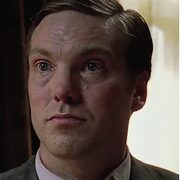
Film still of Andrew Tiernan as Antek Szalas
Antek SzalasPlayed by Andrew Tiernan

An acquaintance asked to support Władek in hiding who withholds help.

Film still of Daniel Caltagirone as Majorek
MajorekPlayed by Daniel Caltagirone

Władek’s friend who helps organize resistance to Nazi occupation.

Film still of Thomas Kretschmann as Captain Wilm Hosenfeld
Captain Wilm HosenfeldPlayed by Thomas Kretschmann

A German army officer who finds Władek in hiding and brings him food.

Film stills from The Pianist (2002). Select linked images to view their sources; the Szalas and Majorek stills came from the class assignment.

PART 1 · DURING THE FILM

Sort the actions: Resistance • Perseverance • Betrayal • Survival

Use the actual actions in the movie—not just definitions—to decide which category best explains each scene.

Directions: Drag each of the 12 scene cards into one square. On a phone, tap a card and then tap the square. You can change your mind by moving it. Some actions overlap: choose the best category and explain one overlap below.

Scene bank

12 ACTION CARDS BELOW — drag to a square, or tap a card and tap its square.

S1 Majorek helps organize resistance to Nazi occupation.
S2 People smuggle food into the Warsaw Ghetto despite restrictions.
S3 Jewish fighters confront German forces in the Warsaw Ghetto Uprising.
S4 Szpilman holds on to his identity as a musician while unable to perform.
S5 In hiding, Szpilman imagines playing a piano without making a sound.
S6 After the war, Szpilman returns to playing music professionally.
S7 Szalas collects support money for Szpilman but keeps it from him.
S8 Szalas fails to bring necessities as Szpilman suffers hunger and illness.
S9 Nazi authorities deceive people as deportations unfold.
S10 Dorota and Michał help arrange places for Szpilman to hide.
S11 Szpilman stays silent and concealed to avoid capture.
S12 Captain Hosenfeld brings Szpilman food while he is hiding.

RESISTANCE

Opposing Nazi policies, helping others resist, or protecting people through defiance

PERSEVERANCE

Holding on to identity, relationships, or purpose through sustained hardship

BETRAYAL

Breaking someone’s trust or exploiting their dependence

SURVIVAL

Finding food, shelter, safety, or avoiding capture to stay alive

PART 2 · HOW IT HAPPENED

From everyday life to persecution: Put the events in order

Directions: Drag all 8 events into numbered slots. On mobile, tap an event and then its numbered position. These are developments across time—not eight equally spaced or inevitable steps.

Event bank

8 EVENT CARDS BELOW — drag to a numbered slot, or tap a card and tap a slot.

E1 Szpilman plays piano on Polish Radio and lives with his family in Warsaw.
E2 Germany invades Poland and occupies Warsaw in 1939.
E3 Nazi anti-Jewish rules restrict everyday life, movement, and work.
E4 Jews are forced to wear identifying armbands.
E5 Jews are forced to move into the overcrowded Warsaw Ghetto.
E6 Hunger, illness, and violence intensify in the ghetto.
E7 Mass deportations separate Szpilman from his family.
E8 Szpilman survives in hiding outside the ghetto.
PART 3 · CONSTRAINED CHOICES

Why didn't people simply fight back?

Important: Jewish people did resist in armed and unarmed ways. The Warsaw Ghetto Uprising in 1943 and the citywide Warsaw Uprising in 1944 were different events. This activity asks what restricted people's options without blaming victims for their persecution.

For each barrier, choose the consequence that fits best.

Directions: Match each barrier to the consequence it caused. Drag a consequence card to its barrier, or tap the card and then the matching box. All four cards are visible below, even without interactive controls.

Consequence card bank 4 cards remaining

B3 Extreme deprivation reduced strength and resources.
B1 German forces controlled weapons and could use overwhelming violence.
B4 Restricted movement and information made coordinated plans difficult.
B2 Retaliation could harm relatives and entire communities.

Match each consequence to its barrier

Weapons and military force

Drop or tap the matching consequence here

Threats to families and others

Drop or tap the matching consequence here

Hunger and disease

Drop or tap the matching consequence here

Isolation and uncertainty

Drop or tap the matching consequence here

After matching, explain how two barriers combined to make armed resistance especially difficult.

PART 4 · TRUST, BETRAYAL & THE AFTERMATH

When your survival depends on someone else

Szalas: Betrayal

Szalas is entrusted with helping Szpilman in hiding. He collects funds meant to support him but does not deliver the needed help.

Helpers: Risk and compassion

Dorota, Michał, and Captain Hosenfeld are among those who help Szpilman. Their circumstances and choices differ.

How do you come back from that?

Revisit the opening and closing piano scenes. Surviving does not undo what happened.

BEFORE

AFTER