
Factories, cities & imperial markets
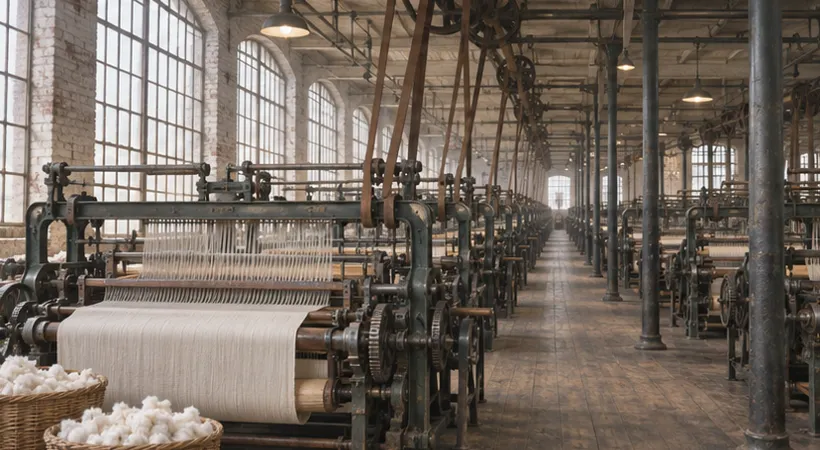
What changed when work moved into factories?
Many cloth producers had worked in homes or small workshops, often combining textile work with agriculture or other tasks. A mechanized mill concentrated expensive equipment and workers in one place. That arrangement gave employers more control over hours, pace, and supervision. Workers who moved to mill towns also had to find housing and buy necessities near their jobs. Looking at where people worked and who controlled the working day helps explain why factory production was a social change as well as a technological one.
The Industrial Revolution reorganized production around machines, concentrated capital, and factory labor. In Britain, investment, access to coal, trade networks, and innovations in textiles and steam power helped production expand. Urbanization, the growth of towns and cities, changed where many people lived and worked. Some gained wages and new opportunities, while crowded housing, difficult shifts, and unsafe conditions produced demands for reform.
Industrial production increased demand for raw materials and access to consumers. Imperialism, the extension of power over other territories and peoples, could give companies privileged access to resources or markets. Steamships, railroads, and communications also made it easier for imperial authorities to move goods and enforce control. Economic motives interacted with rivalry, political prestige, and military strategy.
Workers responded through mutual aid, unions, and advocacy for laws on hours and working conditions. A factory ledger can show higher output. To evaluate living standards or the distribution of wealth, compare wages, prices, accident records, and testimony from workers.
The factory brought workers, machines, and capital together under one owner's management. That arrangement could raise output and lower the price of some goods while exposing workers to long hours, injury, and crowded urban housing. The effects differed by occupation, age, and place. Industrial demand for cotton, minerals, and consumers also connected production to overseas markets and imperial policy. A rise in national output does not establish whether wages kept pace with living costs or whether people supplying raw materials shared in the gains.
- MotiveIndustrial producers seek supplies and consumers.
- MeansSteam transport speeds movement of officials, goods, and forces.
- EffectsTrade and labor change, with unequal costs and benefits.
Imagine a colonial railway connecting a mine to a port. Its route is evidence about export priorities. It does not by itself show that local travel improved everywhere. Add passenger schedules or maps of unserved communities to assess that claim.
Try it
Trace raw cotton and finished cloth through an industrial trade system.
Show sample response
Cotton grown in a colony could be shipped to a factory in Britain. Cloth made there could then be sold in the colony. The process made the colony a supplier and a market.
Partition of Africa & resistance
What existed before the partition?
African societies already governed territory, negotiated commercial relationships, and participated in regional and overseas trade. Their political institutions ranged from large states to communities governed locally. Europeans often drew boundaries or asserted claims without accounting for those existing relationships. The Suez Canal also mattered for reasons beyond the territory around it: ships could travel between the Mediterranean and the Indian Ocean without rounding southern Africa. These starting conditions help explain both why imperial powers competed for particular places and why African responses differed across regions.
European governments competed for African territory for commercial, strategic, and political reasons. Britain’s route through the Suez Canal connected the Mediterranean and Red Sea and shortened access to Indian Ocean routes. The Berlin Conference of 1884–85 established rules for aspects of European imperial competition, without representation for African governments. Conquest and subsequent negotiations established many boundaries over time.
Partition refers to the division of territory among competing powers. European claims on maps did not automatically establish control on the ground. African leaders and communities used diplomacy, military resistance, and other responses. Ethiopia’s victory over Italy at Adwa in 1896 preserved Ethiopian independence at that time.
Colonial rule varied. In the Congo Free State, coercive extraction of rubber inflicted extreme violence on local populations. The economic value of a commodity can help explain why officials pursued control, while testimony and investigation can establish who bore the costs.
African societies had existing political borders, trade relationships, and diplomatic choices before European diplomats drew colonial claims. A European power might announce a claim long before its officials could enforce taxes or labor demands in every locality. Resistance took more than one form: leaders could negotiate with rival powers, contest an invasion, or preserve institutions under pressure. To explain a particular outcome, specify the African community and the imperial power involved rather than treating the entire continent as one event.
- ClaimA government asserts authority over territory.
- EnforceOfficials or armies try to collect taxes and direct labor.
- RespondLocal societies contest, negotiate, or adapt to the attempted rule.
A European map colors a region as a possession. An account of local resistance can show that enforcement was still contested. The two sources answer different questions about overseas claims and political authority on the ground.
Work through the evidence
Suppose a European map colors a large region as one colony. The map documents a claim of control, not how every village or political community responded. Compare it with a treaty, a local account, and records of administration. Those sources can reveal whether officials could enforce the claimed border and what land or authority people lost.
Try it
Why does the Berlin Conference alone tell only part of the story of imperialism in Africa?
Show sample response
Conference records explain European claims and rules. They do not explain local choices, negotiations, and resistance such as Ethiopia’s defense of independence.
India, China & unequal power
Why compare India and Qing China?
In India, a British chartered company became a territorial power, collecting revenue and relying on soldiers recruited locally. Qing China retained its own imperial government while confronting foreign merchants and military pressure at its ports. Both settings faced British demands, but the institutions through which Britain exerted influence differed. Start by identifying who held governing authority in each place before the conflict. That makes it easier to see why the consequences included direct administration in one setting and imposed concessions in the other.
The British East India Company extended authority through warfare, revenue collection, and agreements with Indian rulers. In 1857, a controversy over rifle cartridges helped trigger a rebellion among Indian soldiers that spread in parts of northern and central India. Grievances about annexation, economic pressures, and political authority made the conflict broader than its trigger, the event that immediately set action in motion.
After the rebellion, Britain transferred rule from the company to the Crown. In China, Qing officials’ efforts to suppress the opium trade and Britain’s use of force led to the First Opium War. The Treaty of Nanjing opened ports and ceded Hong Kong Island to Britain. It illustrates how military victory could impose trading and territorial terms.
The later Boxer uprising targeted foreign influence and Chinese Christians. A coalition of foreign powers intervened. Comparison helps distinguish company rule and direct colonial administration in India from unequal treaties and foreign privileges in Qing China.
British power in India and foreign influence in China worked through different institutions. Company officials in India collected revenue and commanded troops before the British Crown took direct responsibility after the 1857 rebellion. In China, unequal treaty provisions granted foreign powers access and privileges while Qing authorities continued to govern. Neither case can be explained by a map showing only European flags. Ask who made laws, who collected taxes, what treaty terms applied, and how local people responded to each form of pressure.
- IndiaCompany rule gives way to direct British Crown administration.
- ChinaForeign powers gain privileges through unequal treaties and force.
- ResistanceLocal movements emerge from grievances specific to each setting.
If a record shows a sudden dispute over military equipment, it helps establish when action began. Records of annexations or earlier petitions make it possible to test whether deeper grievances predated the immediate dispute.
Try it
Why is it helpful to distinguish a trigger from deeper causes when explaining the 1857 rebellion?
Show sample response
Cartridge practices helped set off the rebellion. Grievances over military treatment, annexation, and British interference help explain why resistance spread.
Japan, imperial ideologies & legacies
How did outside pressure shape Japan’s choices?
In the mid-nineteenth century, foreign governments pressed Japan to open ports and accept treaty terms. The resulting disputes took place during a struggle over how Japan should be governed and how it could retain its independence. Meiji leaders drew on foreign practices selectively, studying institutions abroad while adapting reforms at home. Over time, the capacity Japan developed to resist outside pressure also enabled it to exert pressure elsewhere. The same history therefore raises two questions: how a state protects its sovereignty and how it treats its neighbors once its power grows.
Japan’s Meiji Restoration in 1868 began a period of state-directed reform. Leaders revised political institutions, promoted industry and education, and expanded military capacity. These efforts responded in part to pressure from outside powers. Japan later became an imperial power, defeating Qing China and expanding its influence in East Asia.
Imperial states used ideas about supposedly superior peoples or cultures to justify domination. Social Darwinism misapplied ideas about biological competition to human societies. Claims of a civilizing mission can reveal how imperialists defended their choices. To assess effects, compare the claim with evidence of land loss, labor coercion, education, or economic change.
Colonial systems also left legacies, patterns that continued after formal control ended. A railway built mainly to export a resource, or a tax system organized around one crop, could shape later economies. People in formerly colonized societies also reshaped institutions, formed political movements, and pursued new development strategies.
Meiji leaders responded to outside pressure by changing institutions within Japan. Investment in schools, industry, and armed forces strengthened the state, but reforms also changed ordinary people's obligations and work. Later Japanese expansion in East Asia shows that a country could resist unequal foreign pressure while exercising imperial power over others. To explain that change, distinguish the reforms that increased capacity from later decisions to use that capacity abroad. A modernization timeline by itself cannot show how people in occupied regions experienced Japanese rule.
- CapacityState reforms can change the balance of power.
- JustificationImperial claims defend expansion as proper or necessary.
- LegacyExamine which patterns survive a transfer of political control.
A school established under foreign rule may have taught new skills and privileged the language of the ruling power. Records of who could attend, who controlled the curriculum, and how graduates used their education help explain both consequences.
Try it
Explain why Japanese modernization could serve both independence and expansion.
Show sample response
A stronger state and military helped Japan resist foreign pressure. Those same resources later helped Japan expand power over neighbors.