
Independence, partition & sovereignty

What had to change when an empire withdrew?
A transfer of power raised immediate questions about borders, officials, law, and who would control public institutions. Colonial governments had governed through different mixtures of direct administration, local intermediaries, and coercion. Independence movements also differed in their leadership, resources, and strategies. That variation helps explain why one transfer could happen through negotiations and another follow years of war. In places where partition accompanied independence, people also had to make urgent decisions about whether they could safely remain in the homes and communities they already knew.
Decolonization is the ending of formal colonial rule. After World War II, European empires faced economic strain and growing pressure from independence movements. Colonial subjects had organized for self-government before the war, and they used strikes, political parties, diplomacy, boycotts, and armed struggle in different settings.
India and Pakistan gained independence from Britain in 1947. Partition, the territorial division of British India, created new borders and was accompanied by forced migration and widespread communal violence. Ghana gained independence from Britain in 1957 after political mobilization and negotiations. In Algeria, a prolonged war against French rule preceded independence in 1962. In Southeast Asia, independence movements also challenged European efforts to reassert control after Japan’s wartime occupation. Indonesia declared independence in 1945, and the Netherlands transferred sovereignty in 1949 after conflict and negotiations.
Sovereignty is a state’s authority to govern itself. Diplomatic recognition and the transfer of power can establish independence, while borders, trade patterns, and political conflict can continue to constrain what a new government can do.
A new flag and a declaration could mark independence while leaving difficult decisions about borders, public offices, resources, and citizenship. Colonial boundaries had sometimes joined communities with different political histories or divided people with close ties. Independence movements also differed in organization and strategy; some negotiated transfers, while others experienced prolonged conflict. To judge the amount of self-government gained, compare the formal transfer of authority with evidence about who controlled the police, courts, budget, and external relations afterward.
- India and PakistanIndependence and partition reshape political borders and homes.
- GhanaPolitical mobilization and negotiations lead to independence.
- AlgeriaA long war leads to the end of French rule.
An independence agreement can show when government authority changed. Migration records can reveal the human consequences of drawing new borders. Compare documents about legal sovereignty with evidence of experiences during the transition.
Try it
Compare the political and human consequences of partition.
Show sample response
Partition created separate states and altered political authority. It also forced many people to move and exposed communities to violence across new borders.
Bandung and nonalignment
Why could an offer of aid be a political decision?
A newly independent government might need financing for roads, power stations, or schools. Powerful countries could offer loans, technical support, or military equipment because they wanted influence. Accepting an offer could solve a practical problem while raising questions about future obligations. Some Asian and African leaders therefore sought wider cooperation with one another and greater choice among partners. Nonalignment grew out of these decisions about sovereignty and bargaining power. It is easiest to understand by comparing what a government accepted with what it reserved the authority to decide.
Newly independent governments confronted decisions about development, defense, and diplomacy while the superpowers competed for influence. Nonalignment describes efforts to preserve independent foreign policy and avoid automatic membership in a Cold War military bloc. Governments could pursue trade or aid from either side while reserving room to make their own decisions.
At the 1955 Bandung Conference, Asian and African governments discussed cooperation, sovereignty, and opposition to colonialism. The first summit of the Non-Aligned Movement met in Belgrade in 1961. Participants differed in domestic policies and international relationships, even when they shared concerns about outside domination.
To evaluate the choices of a newly independent government, consider which deals it accepted, which obligations it declined, and what leaders said about local priorities. Nonalignment gave states a way to cooperate with one another and bargain with powerful outsiders.
Leaders of newly independent states faced immediate choices about trade, development, security, and the institutions left by colonial rule. Declining a formal military alliance did not mean refusing all aid or claiming that the U.S. and Soviet blocs were identical. A government could accept assistance while trying to keep decisions about its own economy and diplomacy. Compare a leader's stated goal with actual agreements and domestic policy to see how much room for independent action remained. A conference declaration records a position, while a later treaty or budget reveals a specific choice.
- Identify prioritiesChoose security or development goals at home.
- Compare partnersWeigh aid terms and political obligations.
- Retain discretionAccept cooperation while reserving independent decisions.
If a government receives engineering support from one bloc and trades with the other, the deals establish cooperation with both. A treaty committing it to one side’s military operations would provide stronger evidence of formal alignment than trade alone.
Try it
How might nonalignment affect a country’s negotiating position?
Show sample response
A government could compare offers from different partners and decline terms that restrict its freedom to take future decisions.
Rights movements and the end of apartheid
Where did apartheid rules affect daily life?
Apartheid organized much more than elections. Racial classification shaped where many South Africans could live, move, study, work, or own property. Enforcement depended on officials and institutions, so resistance could involve a workplace, a school, a court, or a neighborhood as well as national organizations. International action could add pressure, but local organizing remained central to change. This background explains why the end of apartheid can be studied through new voting rights and also through longer-term changes in the distribution of wealth, land, and public services.
Imperial rule could end while laws and institutions continued to distribute power unequally. In South Africa, apartheid enforced racial classification, segregation, and exclusion from political power. South Africans resisted through community organizing, protests, unions, legal action, and other forms of struggle. International pressure reinforced some of those efforts.
Negotiations helped end apartheid. South Africa held its first fully inclusive national elections in 1994. This political transition broadened formal participation. Inequalities in land, wealth, housing, and access to opportunity remained important questions after the legal change.
The United Nations’ Universal Declaration of Human Rights set out principles that activists could invoke. A human-rights principle can inform public pressure. Evidence of repeal, political representation, or enforcement shows how far the principle changed institutions or conditions.
Apartheid laws affected housing, schooling, work, movement, and political participation, so ending one restriction could not by itself undo every unequal institution. Activists used organizing, protest, legal challenges, and international pressure under changing conditions. A repeal or election documents an important political change, while household, school, or employment records can show how opportunities changed more slowly. South Africa's 1994 national election marked a major change in political participation. Identify a specific right and community when evaluating progress rather than assuming one event transformed every aspect of daily life at once.
- RuleLaws define recognized rights and exclusions.
- PressureOrganizing, negotiations, and international action challenge those rules.
- OutcomeCompare legal access with later social and economic measures.
Participation records from the 1994 election can show a shift in political inclusion. Housing or wealth data answer a different question about the persistence of economic inequality. A full account may need both.
Try it
What evidence could show that ending legal exclusion did not remove every inequality?
Show sample response
New voting rights document expanded political participation. Persistent differences in land ownership, income, or housing can document other consequences that outlast the legal system.
Mandates, nationalism & conflict in the Middle East
Why do the date and author of a map matter?
After World War I, the collapse of Ottoman rule left competing claims over governing authority in several territories. British and French officials administered some through mandates, while local movements pressed their own demands for independence or representation. A map drawn by a diplomatic body might show what it proposed. A military map might show which forces controlled an area at a certain moment. A family’s account could reveal what a border change meant for people leaving home. Identifying the source and its purpose helps students compare these different kinds of evidence.
The collapse of the Ottoman Empire and the creation of British and French mandates after World War I reshaped political authority in parts of the Middle East. A mandate gave an outside power administrative authority under a League of Nations arrangement. Local movements pursued different forms of independence, nationalism, and political representation.
In 1947 the United Nations General Assembly recommended partitioning British-administered Palestine into Arab and Jewish states, with a special international status proposed for Jerusalem. Fighting between Jewish and Arab communities had already begun when Israel declared independence in 1948. Neighboring Arab states entered the war following that declaration. During the conflict, hundreds of thousands of Palestinians fled or were expelled, creating a lasting refugee crisis. Israelis and Palestinians have distinct historical experiences and claims involving security, territory, and self-determination, or the ability of a people to determine its political status.
The histories of the region involve overlapping territorial disputes, regional politics, religious communities, and outside intervention. When comparing accounts, distinguish a proposal from its implementation and identify whose experience each source documents. This is particularly important when sources describe the same event from different locations and positions.
A mandate was described as temporary administration, but residents did not all have equal power to decide who would govern or how boundaries would be drawn. The end of Ottoman rule and later changes in British and French authority intersected with local religious, national, and political movements. Claims to territory could overlap. A map of an outside power's administrative area is useful for locating a policy; petitions, local newspapers, and later agreements can show how affected people contested it.
- ProposalA resolution records what an institution recommended.
- OutcomeMaps and records track control, borders, and displacement after fighting.
- PerspectiveFirst-person accounts show how specific communities experienced the changes.
A proposed partition map and a map showing control after a war can depict the same place very differently. The first documents an institutional recommendation. The second documents an outcome at a stated time. Their differences tell historians which policies and events need further explanation.
Try it
How could you tell whether a recommended border became an actual boundary?
Show sample response
Compare the original proposal with evidence of later control and legal agreements. A border shown in a proposal records a plan, and its appearance on a map does not establish that it was implemented.
Globalization and interdependence
How can one product connect several economies?
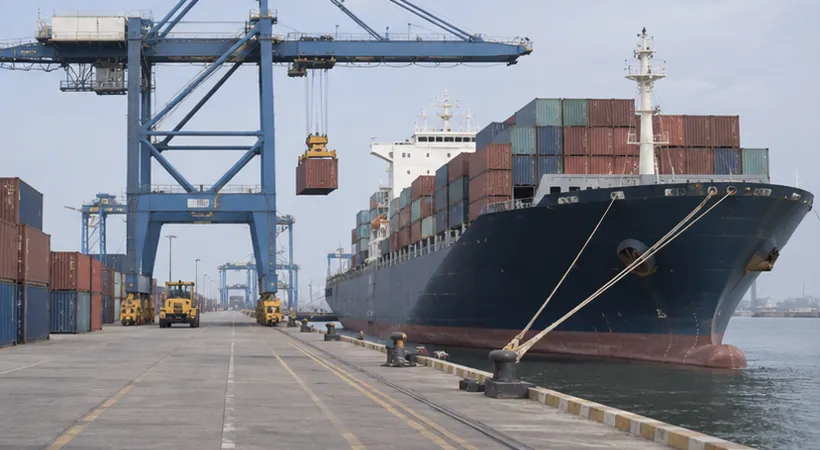
A phone or a car can contain materials extracted in one place, parts produced in several others, and software or designs created elsewhere. Businesses organize production this way because costs, suppliers, expertise, and markets vary across regions. Ports, communications networks, and trade rules make the exchanges possible. If one link fails, effects can reach workers and buyers who have never heard of the original supplier. Following one everyday product through its stages makes the idea of global interdependence easier to see and gives students a way to trace causes and effects.
Globalization refers to increasingly dense cross-border flows of goods, money, information, and people. Container shipping and digital communications made it easier to coordinate production across continents. In a supply chain, firms source materials, manufacture parts, assemble goods, and distribute them to buyers, often through several countries.
Interdependence means that decisions or disruptions in one place can affect people elsewhere. An importing town may benefit from cheaper components and remain exposed to a distant shipping delay. Workers, firms, governments, and consumers can experience different consequences from the same change in trade or technology.
Global problems can also require cooperation because their effects cross borders. Public health, climate, migration, and financial shocks involve different institutions and tradeoffs. The most useful comparisons test broad claims with evidence across regions, time periods, and affected groups.
A supply chain links decisions made in different places. A change in transport costs, a shortage of a component, or a new trade rule can affect the price or availability of a finished product far away. That connection can create jobs and lower some costs, while also making workers and consumers vulnerable to disruptions they cannot control locally. To evaluate who benefits, follow the product from resource extraction through assembly and sale, and compare wages, prices, and environmental effects at each stage.
- SupplierA producer cannot ship a needed component.
- ManufacturerA factory delays assembly while it seeks a replacement.
- ConsumerAvailability and prices can change in other markets.
Imagine a local assembly plant cancels shifts because a component waits at a port overseas. That is evidence of a connection across borders. To establish the scale of the effect, compare shortages, employment records, and delivery times across several plants.
Try it
Explain how one transport interruption could affect a producer and a consumer in different countries.
Show sample response
A factory may delay production while it waits for parts. Retailers elsewhere may receive fewer products, which can change prices or availability for consumers.
Post–Cold War conflict and global cooperation
What makes a problem international?
Some problems begin within a single country but produce effects that reach neighbors or more distant states. Violence can displace families across borders, pollutants can move downstream, and weapons programs can change how other governments assess their security. Institutions respond in different ways because each problem calls for a different kind of evidence and authority. Relief agencies can help people find services, while a treaty can establish obligations and verification procedures. Asking who is affected, who has authority, and what data could measure progress creates a framework for comparing these responses.
After the Cold War, conflicts over territory, political control, and identity continued. In 1994, extremist leaders in Rwanda organized a genocide against the Tutsi, also killing Hutu and others who opposed the violence. In the former Yugoslavia, conflict included forced expulsion and mass violence. Ethnic cleansing describes efforts to remove a group from a territory; courts found that the 1995 killings at Srebrenica constituted genocide. These cases require attention to the actions, intentions, and evidence specific to each setting.
Cross-border challenges also include nuclear proliferation, the spread of nuclear weapons or their acquisition by additional states, and forced displacement, movement compelled by danger or persecution. Political leaders can respond through treaties, peacekeeping, humanitarian aid, or cooperation on enforcement. Each approach has distinct purposes and limits.
Sustainability concerns meeting current needs while preserving the conditions future generations will depend on. Population growth, longer life expectancy, and migration can change demands on housing, infrastructure, and resources; the effects vary among places. Climate and energy choices also have consequences across political borders. A historian can compare the problem a policy claimed to address with evidence about who was affected and what the policy accomplished.
International cooperation begins with identifying which problem crosses borders and what each institution can actually do. A relief organization may provide food or medical care, while governments control border rules, law enforcement, and many funding decisions. A public pledge expresses an intention; budgets, delivery records, and accounts from affected communities reveal whether help arrived. Different crises also require different measures: an emissions trend cannot by itself measure refugee safety, and a ceasefire does not automatically restore homes or schools.
- DisplacementHumanitarian support addresses immediate needs and safety.
- Weapons proliferationTreaties and verification seek to reduce the risk of spread.
- Environmental pressureCooperation can address effects that cross borders.
If a treaty calls for inspections, the agreement establishes the goal and authority for verification. Inspection records provide evidence of what was done. To assess effectiveness, compare those records with the conduct the treaty was meant to constrain.
Try it
Why might a cross-border environmental issue be difficult for one government to solve on its own?
Show sample response
The sources and effects of the issue may be spread across several countries. One government can change its own practices while action elsewhere requires coordination.