
How the Constitution changes
Background
Congress can change many policies by ordinary law. Changing the Constitution uses a separate process involving much broader agreement. Each stage has its own decision-makers. Keeping proposal and ratification separate helps explain why approval by Congress alone does not complete an amendment.
An amendment changes the Constitution itself. Proposal puts a possible change before the states. Ratification is formal approval. The route used for every ratified amendment so far begins with approval by two-thirds of each house of Congress. Article V also provides for a proposing convention called when two-thirds of state legislatures apply. Three-fourths of the states must ratify through legislatures or state conventions, as Congress specifies.
A civil liberty protects an area of freedom from government interference, such as expression. Civil rights concern equal treatment and access under law, such as protection against discriminatory voting barriers. In a scenario, name the action first and then explain what protection or change fits it.
- ProposeTwo-thirds of each house of Congress, or a convention called on application of two-thirds of the states.
- RatifyThree-fourths of states approve through legislatures or conventions, as Congress specifies.
An ordinary federal law can change a program or establish a new rule. A constitutional amendment changes the framework governing what laws can do. The separate proposal and ratification thresholds require agreement across institutions and states. Apply the threshold to the correct stage before deciding whether a proposal has become part of the Constitution.
Try it
Congress proposes an amendment by the required vote. Has the Constitution changed?
Show sample response
No. Three-fourths of the states must still ratify through the method Congress specifies.
Freedom, individual rights and reserved powers
Background
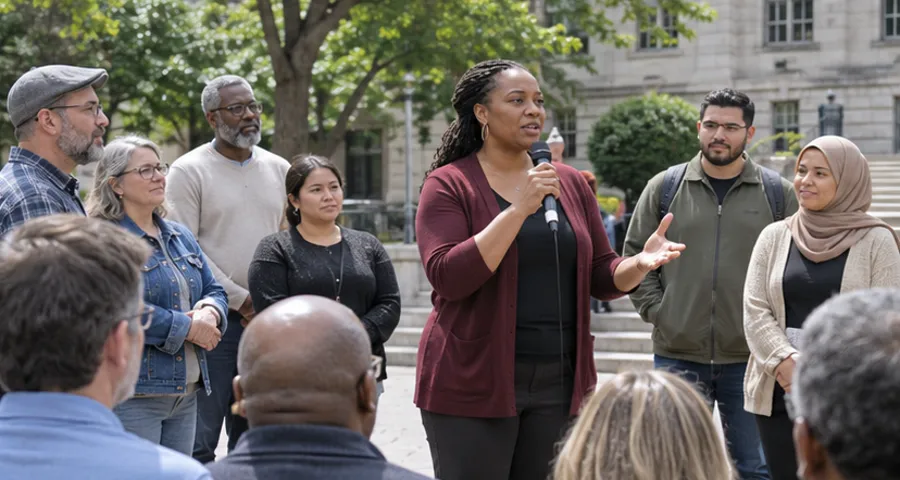
A rights question can involve the subject of a rule, who issues it, and what it restricts. If a public agency denies a gathering because of the viewpoint expressed, that raises a different issue from a neutral rule about scheduling. Careful reading begins with the government action and the specific protection.
The Bill of Rights consists of Amendments One through Ten. The First Amendment protects religion, speech, press, peaceful assembly, and petition. It limits government restrictions, subject to constitutional rules. The Second Amendment protects the right to keep and bear arms. The Third Amendment limits quartering soldiers in private homes.
The Ninth Amendment says listing some rights does not deny or disparage other rights retained by the people. The Tenth Amendment reserves powers not delegated to the United States or prohibited to the states, to the states or the people. A claim about a freedom and a question about which level of government has power call for different reasoning.
- ExpressionThe First Amendment protects speech and peaceful assembly.
- Unlisted rightsThe Ninth Amendment addresses rights retained by the people.
- Reserved powersThe Tenth Amendment addresses powers reserved to the states or the people.
Suppose a city issues ordinary time and location rules for a rally but also rejects one group because it dislikes the group’s message. The second action raises a more direct First Amendment concern because it singles out a viewpoint. In a short response, identify who acted, what was restricted, and which fact connects the restriction to the right.
Try it
Residents send a signed request asking a council to change a rule. Which First Amendment freedom best matches the action?
Show sample response
Petition. They are asking government to address a concern.
Searches, trials and limits on punishment
Background
A criminal case contains several events: investigation, questioning, trial, and possible punishment. Each stage can raise a different constitutional question. Identifying what government did helps you choose the right protection even when several rights matter in the same case.
The Fourth Amendment protects against unreasonable searches and seizures. A warrant generally requires probable cause, a sufficient factual basis for the warrant, and must particularly describe the place to be searched and the persons or things to be seized. Legal exceptions can affect whether a warrant is required in a particular case.
The Fifth Amendment provides protections including due process, or fair legal procedures and applicable legal limits, and prohibits compelled self-incrimination in a criminal case. Double jeopardy generally bars a second prosecution by the same sovereign for the same offense after acquittal or conviction, subject to legal rules. The Fifth Amendment also requires just compensation when private property is taken for public use. The government’s power to take property for public use is eminent domain.
The Sixth Amendment protects rights in criminal prosecutions, including a speedy and public trial, an impartial jury, and assistance of counsel. The Seventh Amendment preserves jury trial in certain federal civil cases. The Eighth Amendment bars excessive bail, excessive fines, and cruel and unusual punishment. Warrant, testimony against oneself, lawyer at trial, and excessive fine are different clues.
- SearchThe Fourth Amendment protects against unreasonable searches and seizures.
- ProsecutionThe Fifth and Sixth Amendments protect different parts of fair process.
- PunishmentThe Eighth Amendment limits excessive bail and fines and cruel and unusual punishment.
A challenge to an unreasonable search and a challenge to a denial of counsel address different government actions. Search questions typically point toward the Fourth Amendment. A right-to-counsel question in a criminal prosecution points toward the Sixth. Start with the precise conduct in the scenario, because a single case can raise several rights at different stages.
Try it
One person challenges an unreasonable search. Another says they were denied counsel in a criminal prosecution. Which amendments apply?
Show sample response
The Fourth Amendment addresses the search. The Sixth Amendment addresses assistance of counsel in the criminal case.
Reconstruction and equal protection
Background
After the Civil War, ending slavery left questions about citizenship, equality, and political participation. The Reconstruction Amendments address different parts of that problem. Studying what each amendment changed helps explain why formal freedom, legal protection, and access to the ballot require distinct evidence.
The Thirteenth Amendment abolished slavery and involuntary servitude except as punishment for a crime after conviction. The Fourteenth Amendment addresses citizenship and forbids states to deny due process or equal protection, meaning people are entitled to the equal protection of the laws. The Fifteenth Amendment prohibits voting denial or abridgment based on race, color, or previous condition of servitude.
Incorporation is the application of many specific Bill of Rights protections to state and local governments through the Fourteenth Amendment’s Due Process Clause. A scenario can involve both a specific right and the question of which government acted. Constitutional guarantees did not end discriminatory practices on their own. Enforcement and later laws also mattered.
- 13thAbolishes slavery and involuntary servitude, except as punishment for crime after conviction.
- 14thEstablishes citizenship rules and protects due process and equal protection against state action.
- 15thBars voting denials based on race, color, or previous condition of servitude.
The Reconstruction Amendments changed the federal constitutional framework in different ways. A law using race to exclude citizens from voting directly raises the Fifteenth Amendment. A state law treating people unequally raises an equal protection question under the Fourteenth. Use the legal action in the prompt to choose the most direct connection.
Try it
A state treats two groups differently under the same law. Which Reconstruction amendment directly supplies the Equal Protection Clause?
Show sample response
The Fourteenth Amendment. It restricts state action that denies equal protection.
Expanding the right to vote
Background
Voting rights expanded as people challenged specific barriers. A rule about age, a charge for casting a federal ballot, and a rule excluding people based on sex work in different ways. In an application question, identifying the barrier is more useful than simply recognizing that the topic is voting.
Suffrage means the right to vote. The Fifteenth Amendment targeted race-based denial. The Nineteenth Amendment barred voting denial based on sex. The Twenty-Third Amendment gave the District of Columbia presidential electors. It did not make the district a state.
The Twenty-Fourth Amendment banned poll taxes in federal elections. The Twenty-Sixth Amendment barred age-based voting denial for citizens eighteen or older. Identify the barrier before choosing an amendment. A poll tax and an age cutoff may both keep a person from voting, but they point to different protections.
- 19thVoting may not be denied on account of sex.
- 24thBars poll taxes in federal elections.
- 26thProtects voting rights of citizens 18 and older against denial based on age.
Two questions can both concern voting rights while testing different barriers. A charge imposed as a condition of voting in a federal election points to the Twenty-Fourth Amendment. Denying an otherwise eligible citizen a ballot because the person is 18 points to the Twenty-Sixth. Read the exact barrier before selecting an amendment.
Explore the official source: National Archives: Amendments 11–27
Try it
An otherwise eligible voter is asked to pay a tax before voting for president. Which amendment directly addresses that condition?
Show sample response
The Twenty-Fourth Amendment prohibits conditioning the federal vote on payment of a poll tax or other tax.
How later amendments changed government
Background
Elections and unexpected vacancies exposed problems in the original governing structure. Later amendments created procedures for situations such as separate electoral votes, a vacancy in the vice presidency, or an inability to perform presidential duties. Identify the problem before choosing the rule.
The Eleventh Amendment limits some federal suits against states. The Twelfth Amendment provides separate electoral ballots for president and vice president. The Sixteenth Amendment allows federal income taxes without apportionment among states. The Seventeenth Amendment changed the selection of senators from state legislatures to direct election by voters.
The Eighteenth Amendment established national Prohibition. The Twenty-First Amendment repealed it. The Twentieth Amendment moved the starts of presidential and congressional terms earlier, shortening the transition after elections. The Twenty-Second Amendment generally limits a person to being elected president twice, with a further rule for someone who served more than two years of another president’s term.
The Twenty-Fifth Amendment addresses presidential succession and inability and provides a process to fill a vice-presidential vacancy. The Twenty-Seventh Amendment delays changes in congressional compensation until after an election of representatives has intervened. Group the changes by purpose. Some address elections or vacancies, some change government powers, and others change constitutional policy.
- 12thElectors cast distinct votes for president and vice president.
- 22ndLimits election to the presidency.
- 25thAddresses presidential succession, vice-presidential vacancies, and presidential inability.
Amendments can address an institutional problem such as how electors distinguish offices, how long a president may be elected to serve, or how presidential inability is handled. Ask which problem appears in the prompt before matching it to the amendment. This approach is more reliable than recognizing a familiar number without connecting it to the scenario.
Try it
Congress votes to raise its own pay. What accountability rule does the Twenty-Seventh Amendment apply?
Show sample response
A change in congressional compensation cannot take effect until an election of representatives has intervened.