
Citizenship, rights and responsibilities

Background
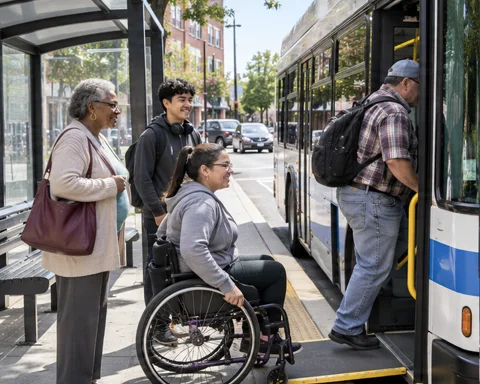
Think about the decisions that affect a school neighborhood: a bus route, a park budget, or a dangerous crossing. Different public offices may control each decision. A resident who identifies the responsible office can choose an action that fits, such as attending a hearing or contacting a representative. This is a practical way to connect civic participation to a decision someone can actually change.
Citizenship is legal membership in a country. In the United States, people can acquire citizenship at birth under constitutional or statutory rules. Naturalization is the legal process by which an eligible noncitizen becomes a citizen. American citizenship includes political rights such as voting in federal elections when eligible. Many constitutional protections, including due process, also apply to people who are not citizens.
A right is a legally protected freedom or claim, such as the freedom to petition government. A civic duty is required by law when it applies, such as paying taxes you owe or reporting for jury service when summoned. A civic responsibility is an action that helps the community, such as staying informed, voting when eligible, or volunteering. The same person can exercise a right and fulfill a responsibility through one action.
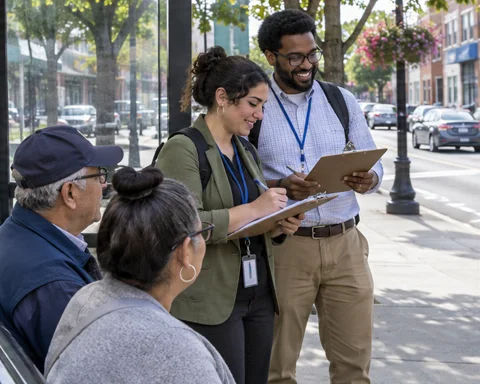
Civic participation means taking part in public life. A petition is a written request, often signed by multiple people. A resident can also attend a hearing or contact a public office. Before acting, find the body with authority over the issue. A transit board may be able to revise a bus route. A public policy is a decision or course of action adopted by a public body, such as how routes are funded. The common good refers to conditions that benefit the community as a whole, such as safe, dependable transportation.
- RightSpeak at a public meeting.
- DutyPay the taxes you legally owe.
- ResponsibilityCheck the route proposal and share useful evidence.
Imagine a rider whose job depends on the evening bus. Signing a petition exercises a protected right, attending the transit board meeting is voluntary participation, and paying taxes owed is a legal obligation. A single event can involve more than one category. Classify the specific action and explain the rule or purpose that makes the category fit.
Try it
A resident pays taxes and then speaks at a transit meeting. Classify each action.
Show sample response
Paying taxes owed is a legal duty. Speaking at the meeting is voluntary civic participation and can exercise the right to address government.
Political parties and the political spectrum
Background
People who want the same bus route might support it for different reasons. One might value access to jobs, another might want shorter car trips, and a third might favor a limited trial instead of a permanent expansion. Their agreement on one proposal tells us little about how they would vote on every issue. A party platform combines positions across many issues, while an ideology helps explain why a person approaches an issue a certain way.
A political party organizes people around the goal of winning elections and influencing government. Its platform is a public statement of policy goals. Because parties bring together voters and candidates with a range of views, support for the overall platform can coexist with disagreement about a particular policy. A candidate’s proposals and votes provide more specific evidence about that candidate’s priorities.
A political ideology is a set of beliefs about government and society. A political spectrum is a simplified way to arrange those beliefs. In present-day U.S. politics, a liberal viewpoint often favors using government to address inequality or provide public services. A conservative viewpoint often emphasizes limited government in the economy, individual responsibility, or preserving valued institutions. A moderate viewpoint may combine positions or favor gradual changes. These are broad patterns, and people may hold different views on different issues.
A third party competes outside the two major parties and may bring more attention to a concern. Partisanship means strong support for a party. Bipartisanship happens when members of two parties cooperate. A vote by members of both major parties can be bipartisan even when some members of each party oppose it.
- LiberalLeft
- ModerateCenter
- ConservativeRight
The line shows broad patterns. A person can support ideas from different parts of the spectrum, and party membership describes a person’s affiliation.
Liberal approach
Expand bus service now so more people can get to work, school, and appointments.
Priority
Access to a public service
Moderate approach
Try extra buses on one route, then use rider feedback and cost data to decide whether to expand.
Priority
A gradual change with a review

Conservative approach
Improve the busiest existing routes using the current budget before committing to new spending.
Priority
Limiting new public spending
A platform is evidence of what a party publicly supports. A candidate’s voting record or proposal is stronger evidence of what that person has actually done or plans to do. If a candidate supports expanded bus service and lower business taxes, those positions illustrate why an issue-by-issue comparison is more informative than predicting every stance from a single label.
Try it
A candidate favors fewer business regulations and more public transit funding. What does that show about a one-line spectrum?
Show sample response
The candidate holds positions that may be associated with different parts of the spectrum. The spectrum helps describe patterns, while the specific positions explain the candidate’s choices.
Interest groups, lobbying and campaign money
Background
Imagine two groups seeking safer roads. One asks the city council to change a traffic rule. Another helps elect a candidate who supports its proposal. Both try to shape public policy, but they approach different decision-makers and use different methods. To identify the action, look at who received the message or money and what the group wanted to accomplish.
An interest group organizes people around a cause, profession, or shared concern. Advocacy means arguing for a policy or change. Lobbying is communicating with public officials to influence a decision. A group can lobby a council, organize grassroots advocacy by mobilizing residents, or join a coalition, a partnership with other groups pursuing a shared goal.
A federal political action committee, or PAC, raises and spends money to influence elections. A traditional PAC may give regulated campaign contributions to candidates. A Super PAC may raise unlimited funds from permitted sources for independent political activity. It cannot contribute those funds directly to federal candidates or coordinate its independent spending with them. An independent expenditure pays for a message for or against an identified candidate without that coordination.
Use the action to distinguish the roles. A transit association asking officials for more frequent buses is lobbying. An association telling voters it supports a candidate is making an endorsement. Paying for independent campaign advertising and giving money directly to a candidate are separate actions with different rules.
- LobbyingAsk an official to change a policy.
- ContributionGive money directly to a campaign under applicable rules.
- Independent spendingPay for an election message without coordinating.
A disability-rights group may submit a report to council to influence bus-stop design. If a separate committee pays for an ad telling voters to elect a candidate and does not coordinate it with the campaign, the action instead concerns independent election spending. Who receives the message and what the group wants that recipient to do are the strongest clues.
Explore the official source: Federal Election Commission: Super PACs
Try it
A group meets with council members about bus funding. Later, a separate committee buys an ad supporting a candidate. What two actions are involved?
Show sample response
The first action is lobbying. The second is campaign spending. Whether the spending is independent depends on whether there was coordination.
Media literacy and usable evidence
Background
Suppose a headline says a new bus route doubled ridership. The statement might be accurate for one stop and misleading for the rest of the city. A student can check what was counted, what period was measured, and what comparison the number supports. These steps help separate the quality of the evidence from whether the headline sounds persuasive.
Media literacy is the ability to understand and evaluate messages. A fact is a verifiable statement, such as the date on a public meeting notice. An opinion expresses a judgment, such as whether a route is convenient. A factual-sounding claim still needs evidence, information that can support or challenge it. A chart can contain true numbers while leaving out context needed to interpret them.
Credibility is how trustworthy a source is for the particular question. A primary source gives direct evidence from the time or event, such as a vote record. A secondary source interprets or explains other evidence, such as an article analyzing the vote. A primary source can still show bias, a perspective or tendency that shapes what is included and how it is presented.
Lateral reading means leaving a page to check what independent sources say about it. Corroboration means comparing independent evidence. Ten posts copying the same rumor are one underlying claim. Misinformation is false information, while disinformation is deliberately misleading information. Propaganda is a message designed to influence beliefs or behavior. Confirmation bias can make a claim seem more believable simply because it fits what you already think.
- Find the claimWhat does the post say, exactly?
- Find the original recordCheck the report’s dates, route, and comparison.
- Check independentlyLook for corroboration that does not repeat the same post.
Suppose a post says ridership fell by half. The transit report may confirm that number for one route during construction while showing stable citywide ridership. The number can be accurate while the post’s inference is misleading. Before using a figure as evidence, identify what was measured, when it was measured, and which comparison is justified.
Try it
A viral post claims the route was canceled. Which record would you look for first?
Show sample response
Look for the transit board’s approved minutes, current route schedule, or formal service notice. Then compare the post with the date and details in that record.
Negotiation, mediation and arbitration
Background
A disagreement over a bus stop may involve separate needs: residents want access, merchants need loading space, and a transit agency must maintain a schedule. Identifying those needs opens more options than repeating each side’s original demand. The best process depends in part on who has authority to decide and whether the parties want help finding their own agreement.
A position is what someone says they want. An interest is the reason behind it. One group wants an extra bus stop, while another wants a faster ride. The first group may need safe access to school, and the second may need to arrive at work on time. Active listening means checking your understanding before responding. Naming the interests can reveal options beyond the original positions.
In negotiation, people work directly to reach an agreement. In mediation, a neutral person helps the sides communicate, but the sides decide whether to agree. In arbitration, a neutral person hears the sides and makes a decision under agreed or applicable rules. Compromise usually means each side gives something up. Consensus is broad acceptance of a decision, even when it is not everyone’s first choice.
Civil discourse means disagreeing while treating other people with respect and addressing their claims with reasons. Persuasion tries to change someone’s view through reasons or appeals. A practical next step is to state what both sides value and ask what evidence would help them choose among options.
- NegotiationThe parties bargain directly.
- MediationA neutral helps the parties find agreement.
- ArbitrationA neutral hears the dispute and issues a decision.
Imagine riders and shop owners disagree about relocating a stop. Negotiation allows them to reach an agreement directly. A mediator might identify an option both sides overlooked while leaving the decision with them. An arbitrator may be empowered by the parties or applicable rules to decide the dispute. The deciding clue is the neutral person’s authority.
Try it
A neutral person asks questions and suggests words for an agreement. The parties can still reject it. Which process is this?
Show sample response
Mediation. The neutral person supports the discussion, and the parties retain decision-making power.