
Immigration, ethnic neighborhoods & exclusion
Background
Arriving in a city did not end the work of migration. A newcomer still needed housing, employment, and practical help with language or unfamiliar institutions. Family and community networks could help. Admission laws shaped which journeys were even possible. A passenger list and a neighborhood directory therefore document different stages of an immigrant’s experience.
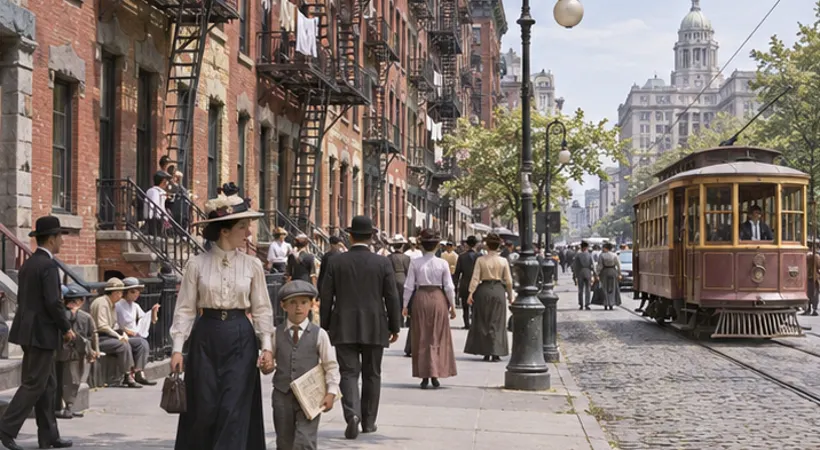
People moved to the United States for reasons that included jobs, family connections, land pressures, persecution, and conflict. Their arrival coincided with expanding demand for industrial labor. Ethnic neighborhoods sometimes provided language support, religious communities, job contacts, and mutual aid. Housing costs and discrimination could also limit where people lived.
Immigrants encountered different legal treatment based on their background. The Chinese Exclusion Act sharply restricted immigration of Chinese laborers. Later quota laws favored some national origins over others. To understand immigration policy, distinguish an individual’s reasons for moving, the ways communities responded, and the federal rules governing who could enter.
Immigrant communities built institutions such as churches, mutual aid societies, and newspapers. These could help people maintain languages and traditions while learning to navigate U.S. institutions. They also created opportunities to organize around wages, housing, and education. A neighborhood could be a source of support even when wider legal or economic barriers remained.
New arrivals did not all enter through the same legal rules or settle in the same kind of community. A family might rely on relatives for a first room or job, then help build a neighborhood association, newspaper, or religious institution. Exclusion laws and discrimination could restrict another group's choices even when factories needed workers. A passenger list gives a date of arrival; a city directory, family letter, or employment record helps trace what happened afterward. Keep reasons for leaving distinct from conditions encountered on arrival.
- Reasons to moveWork, family, persecution, or conflict.
- Community networksHelp new arrivals find housing or jobs.
- RestrictionsAdmission rules limit who can enter.
A neighborhood directory can show the location of businesses and associations. Family letters can explain why a person moved and how those organizations helped.
Try it
Explain how an ethnic neighborhood could make it easier for a newcomer to find work and take part in city life.
Show sample response
Neighbors could share job leads and explain how local services worked in a language the newcomer understood. Those connections could help someone navigate unfamiliar institutions.
City life, settlement houses & political machines
Background
A growing neighborhood might have more residents than its housing and public services could support well. People could seek assistance from a volunteer organization, a city office, or a political organizer. Those institutions might solve the same immediate problem while using very different sources of money, power, and accountability.
Industrial cities grew as people searched for work and settled near transportation and factories. City governments struggled to provide sanitation, safe housing, and other services at a pace that matched population growth. A settlement house offered services such as education, childcare, or health support. Hull House in Chicago is a well-known example.
Political machines built durable organizations by connecting public services, favors, and jobs to political support. For some voters, a district organization offered quick help when other institutions were hard to reach. At the same time, patronage and corruption could allow officials to use public authority for private or party advantage.
Patronage connected employment to political loyalty. Reform efforts to use civil service rules sought to reduce the discretion officials could use when filling some jobs. A system that improved hiring standards did not necessarily solve the practical problem of residents finding services. Assess a reform against the particular problem it was intended to address.
Population growth increased the need for clean water, housing inspection, schools, and transportation. A political organization might deliver immediate help to residents while expecting votes or loyalty in return. A settlement house could also offer classes and services without operating as the city government. Those experiences explain why residents might value an organization that reformers criticized for patronage. Evaluate both the assistance received and the use of public jobs or contracts, using resident accounts together with city records.
- Settlement housesProvide services and organize reform.
- Political machinesConnect help and jobs to a network of political support.
- Public reformTargets services, oversight, or working conditions.
An account from a resident receiving help and a city contract audit can support different conclusions about the same organization. Read each for what it directly documents.
Try it
Explain how a political machine could meet an immediate need and weaken accountable government at the same time.
Show sample response
A machine could help a family find fuel or work. If officials traded those services for votes or rewarded allies with contracts, residents had less reason to expect impartial public decisions.
Muckrakers, regulation & conservation
Background
As food traveled farther from producer to buyer, a customer could no longer see most of the process that brought it to a store. Investigations made some conditions visible. Lawmakers then had to decide which rules to adopt and who would enforce them. It takes a different record to show a public concern, the new rule, and whether anyone carried it out.
Growth in production brought goods to more customers, but consumers often knew little about how those goods were made. Muckrakers, investigative writers, documented unsafe conditions, corruption, and other problems. Reporting could attract public attention and help reformers press lawmakers, but legal change still required government action.
Federal laws in 1906 addressed food and drug labeling and meat inspection. Regulation creates enforceable standards, while conservation concerns the use and protection of natural resources. Progressive reform took several forms. Compare what a law authorized, how officials enforced it, and whose interests a rule affected.
Upton Sinclair’s novel The Jungle drew attention to conditions in the meatpacking industry. Readers and lawmakers responded to concerns about food safety, while the book also described the lives of workers. Distinguishing those subjects helps explain why attention to one account can produce a law directed toward only part of the problem it raised.
A journalist's investigation could bring a problem to the public, but a new law required legislators to choose what to regulate and administrators to enforce it. Concerns about contaminated food, misleading labels, unsafe work, and misuse of natural resources did not all produce the same policy. A statute shows the authority officials received; inspection records can show where they used it; workers' or consumers' accounts may reveal problems that remained. Trace the steps from exposure to action rather than equating publicity with a solved problem.
- InvestigateJournalists or inspectors document conditions.
- EnactLawmakers adopt standards or authorize enforcement.
- EvaluateLater records show inspections, compliance or continued problems.
A reporter’s description can explain why consumers demanded action. Inspection reports after the law can help test whether enforcement changed production conditions.
Try it
State an urban or industrial problem, give one specific Progressive response, and explain why the response addressed that problem.
Show sample response
Consumers could not always tell what was in a packaged product. Federal action against misbranding addressed misleading labels. The rule gave regulators a way to act when a seller made false claims.
Political reforms & Progressive amendments
Background
A reformer who wants to change how officials are chosen faces a different problem from a voter who wants to overturn a particular law. Progressive reforms changed both policy and the ways citizens could influence decisions. Identify whether the reform alters an election, creates a new public rule, or gives voters another way to act.
Progressives challenged institutions they believed gave too much discretion to party leaders or business interests. Reforms such as the initiative, referendum, and recall gave voters new ways to propose measures, review laws, or seek removal of elected officials under applicable rules. These processes varied across states.
National amendments addressed different problems. The Sixteenth supported a federal income tax without apportionment among states. The Seventeenth provided direct election of senators. The Eighteenth established national Prohibition, later repealed. The Nineteenth barred voting denial based on sex. An expanded legal right still required implementation and did not remove every barrier.
A change in procedure can alter who officials must persuade. Direct election of senators shifted that role from state legislatures to voters. The Nineteenth Amendment barred denial of voting on account of sex, but many people continued to face barriers based on race, citizenship status, or local practices. Legal access and practical access deserve separate attention.
A voter initiative and a constitutional amendment operate at different levels and through different procedures. A petition under state rules may put an eligible proposal before voters, while a federal amendment changes the national constitutional framework after proposal and ratification. Even then, election officials administer registration and voting locally. To evaluate a reform, first ask which decision-maker it targeted, then compare the legal rule with records showing who could actually use the new process.
- 16thIncome taxation.
- 17thDirect election of U.S. senators.
- 18th and 19thProhibition and voting rights, respectively.
A state election notice and the text of an amendment answer different questions. The amendment describes a national rule. The notice can show how one state put an election procedure into practice.
Work through the evidence
A reformer proposes direct election of senators; another proposes a food-inspection law. Both seek change, but they target different decisions. The Seventeenth Amendment changes who chooses senators. An inspection statute changes standards and enforcement. Ask whether a source describes the way officials are selected, a rule they must follow, or evidence of the rule's effect.
Try it
Compare direct election of senators with recall. Explain what decision voters make under each reform.
Show sample response
Direct election lets voters select a senator. Recall lets voters decide whether to remove an eligible officeholder before the next regular election. The reforms address selection and removal, respectively.