
Reading primary and secondary sources
Background
Imagine writing the history of a school rule with three records: a board vote, a student’s letter, and an article written years later. The vote can document what the board approved. The letter can show how a student understood the change. The article can bring those records together, but its interpretation still needs to be checked against what the evidence actually supports.
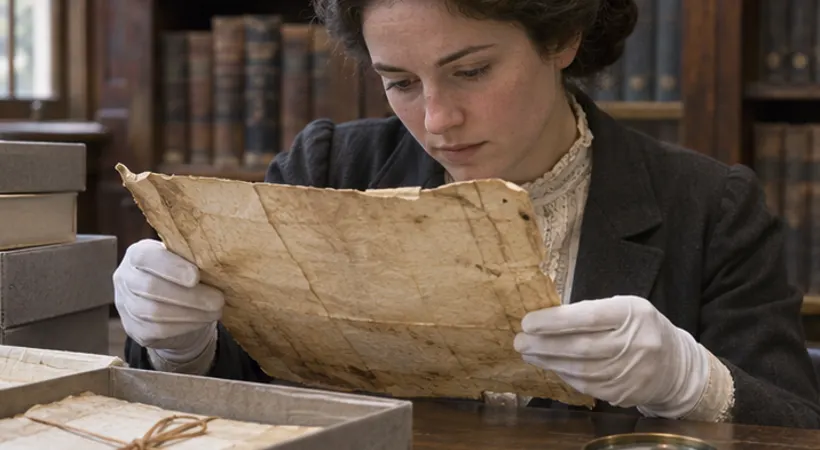
An eyewitness letter can show what one writer saw and wanted a reader to understand. A later historian can compare that letter with records the writer never saw. A primary source has a direct connection to the event or period being studied. A secondary source interprets evidence from the past. What counts as primary can depend on the question.
Begin by identifying the author, audience, date, and purpose. Ask what the source can establish and what lies outside its author’s view. To corroborate a claim, look for independent evidence rather than a second copy of the same account. Conflicting sources give you a reason to investigate their contexts.
Credibility is also specific to the claim. A census can be a strong source for recorded population and a weak source for private opinion. A personal account may be valuable precisely because it presents one viewpoint. A reader should explain why the source is suitable for the conclusion being drawn.
Imagine a school board record saying that a rule passed, a student's letter describing confusion about it, and a later article calling the rule popular. The board record establishes the official decision; the letter reports one person's experience; the article offers a later interpretation. None alone tells you how every student responded. A historian can compare dates, audiences, and possible access to information before writing a claim. An apparent disagreement may reflect different questions rather than a source that must be discarded.
Consider a wartime recruiting poster. It can establish the message an agency wanted the public to see, but not how many people enlisted because of it. A dated enlistment series could show a change in numbers; letters or interviews might help explain individual decisions. Even then, other events may have changed enlistment at the same time. When a source seems vivid, ask whether it measures the claim you are making. An image, a government count, and a personal account have different strengths, and a careful argument uses each for the question it can answer.
- ObserveRecord what the source actually shows.
- QuestionIdentify who created it and why.
- CorroborateUse independent evidence to test an inference.
The advertisement records the message an employer wanted to circulate. Pay records or worker letters could help test a claim about earnings.
Try it
Explain what a factory advertisement can establish and name a source that could test its claims.
Show sample response
The advertisement records the message an employer wanted to circulate. Pay records or worker letters could help test a claim about earnings.
Declaration, Articles, Constitution & Bill of Rights
Background
Between announcing independence and adopting the Bill of Rights, Americans faced a series of different decisions. They needed to justify separation, organize cooperation among states, create a government that could carry out common decisions, and decide how to restrain it. Reading the documents in that sequence makes each purpose easier to recognize when a test presents only a short excerpt.
The Declaration of Independence argued that governments exist to secure rights and derive authority from consent. It announced separation from Great Britain. The Articles of Confederation organized a union while leaving substantial power with the states. Congress could request state revenue but could not directly levy national taxes under the Articles.
Delegates proposed a new Constitution in 1787. It delegated federal powers, divided national responsibilities across branches, and created checks on authority. The Bill of Rights, ratified in 1791, added express protections. A passage justifying independence, a provision authorizing government, and an amendment limiting federal power perform different jobs.
The Constitution’s distribution of powers produced both vertical and horizontal limits. Federalism concerns the relationship between national and state authority. Separation of powers concerns the responsibilities of the national branches. An argument about which government can act asks a different question from one about which branch can act.
The three founding documents responded to different problems. The Declaration justified separation from Britain; the Articles organized cooperation among states during and after the Revolution; the Constitution created a stronger national framework with specified powers and limits. The Bill of Rights then added explicit protections after debate over ratification. A claim about why independence was declared needs different textual evidence from a claim about which branch can tax or regulate commerce. Identify the document's purpose and date before using a familiar phrase as proof.
The sequence matters. Independence was declared in 1776, the Articles governed the first union, the Constitution was drafted in 1787 and ratified by the states, and the first ten amendments were ratified in 1791. The Articles' weakness in raising national revenue became one argument for change, but delegates also debated representation and the danger of concentrated power. Federalists defended the proposed framework; Anti-Federalists pressed for clearer safeguards. When comparing the old and new governments, point to a specific power or limit in the text rather than treating every complaint about the Articles as proof that the Constitution solved it completely.
- DeclarationExplains and justifies independence.
- ArticlesOrganize the first national framework.
- Constitution and amendmentsCreate institutions and define powers and limits.
The first explains the basis of legitimate government. The second sets out a particular power of a government institution.
Try it
Explain why a declaration about consent and a clause giving Congress taxing power serve different purposes.
Show sample response
The first explains the basis of legitimate government. The second sets out a particular power of a government institution.
Claims, evidence & historical causation
Background
A timeline of a labor dispute might place rising prices, a new work rule, and a walkout in the same month. That is enough to notice possible connections. Meeting records or worker testimony can help explain which issues affected the decision and whether another explanation fits better. The goal is to give a reader a reason to accept the conclusion.
A timeline helps distinguish the order of events. A causal argument needs evidence of a connection. For example, rising prices before a strike may be relevant, but worker demands and meeting minutes can show whether a fall in purchasing power affected the decision to strike.
A strong thesis answers a specific question and can account for contrary evidence. Separate underlying conditions from a direct trigger, and check whether the same conditions produced different results elsewhere. More than one cause can matter. The strength of a claim depends on what the sources can establish and what alternatives remain plausible.
The timing of events can help rule out an explanation. A law cannot explain a change that occurred before it took effect. When evidence supports more than one contributing cause, explain what each factor did. A trigger can explain why action happened at one moment, while longer-term conditions explain why people were ready to act.
Two events occurring close together make a causal explanation possible, not certain. If workers strike after wages fall, a demand letter naming the wage cut strengthens the connection. A record of dangerous conditions might show another contributing cause. The historian should explain how each factor could have influenced a decision and whether the timing permits that explanation. A strong claim also allows for limits: evidence from one workplace may not explain why workers in another city made a different choice.
A useful test of cause is to compare places or groups exposed to similar conditions. If two towns experienced rising food prices but only one had a strike, investigate differences in wages, organization, and management decisions. Meeting minutes might identify a demand; payroll records could establish the size and timing of a wage change. Neither record proves that every worker had the same reason for acting. A historical explanation can identify a trigger, an underlying condition, and a decision that connected them, while acknowledging evidence that would change the claim.
- SequenceIdentify what happened before and after.
- MechanismShow how one development affected another.
- AlternativeCompare another explanation against the same evidence.
A price increase could come first without causing the strike. Organizers’ demands could show whether purchasing power, hours, or another concern actually influenced their decision.
Try it
Use a strike example to explain why sequence alone does not establish cause.
Show sample response
A price increase could come first without causing the strike. Organizers’ demands could show whether purchasing power, hours, or another concern actually influenced their decision.